NBA Betting Scandals: Player Gambling Violations and Federal Cases
 Available in US
Exposing the intersection of sports and gambling fraud
I was sitting in a London sportsbook when the Jontay Porter news broke. The punter next to me looked at his slip, then back at the screen, and muttered something about the NBA being “bent.” That reaction – cynical, immediate, slightly resigned – captures exactly why these scandals matter to anyone placing money on basketball. If you cannot trust that players are trying their hardest, why bet at all?
After nine years analysing sports betting integrity cases across the US and UK markets, I have watched this story evolve from isolated incidents to systemic concern. The global sports betting market hit $100.9 billion in 2025 and is projected to reach $187.39 billion by 2030. That kind of money does not simply attract casual punters – it attracts those who see manipulation as a business opportunity. The US sports betting market alone generated record revenue of $13.71 billion in 2025, a 25.4% jump from the previous year. More money, more temptation, more risk.
What happened with Porter was not just one player making terrible decisions. It exposed vulnerabilities in the system that every serious bettor needs to understand. The same weaknesses that allowed a Toronto Raptors player to manipulate prop bets exist in every game you might wager on tonight. The October 2025 arrests that swept up Terry Rozier and 33 others revealed connections to organised crime that should concern anyone who assumed NBA basketball was beyond the reach of match-fixers.
This guide breaks down everything I have learned about NBA betting scandals – from how they happen, to how they get caught, to what they mean for punters placing bets from the UK. I am not here to sensationalise. The tabloid coverage has done enough of that. What I will give you is the analytical framework to understand these cases, assess their implications, and make more informed decisions about where and how you bet on professional basketball. The integrity of the game affects your bottom line. Let us examine why.
- Essential Framework for Analyzing Player Betting Violations
- Defining the Scandal: More Than Headlines and Hot Takes
- Seven Decades of Deception: A Timeline of NBA Gambling Scandals
- The Rulebook: What NBA Personnel Actually Cannot Do
- Catching the Cheats: Detection Methods and Their Limitations
- When the Hammer Falls: Consequences Across League and Court
- Inside the Investigation: How the FBI Builds These Cases
- The British Angle: What These Scandals Mean for UK Punters
- Following the Money: Market Growth and Its Discontents
- Protecting Your Stake: Practical Guidance for Informed Betting
- Frequently Asked Questions About NBA Betting Scandals
Essential Framework for Analyzing Player Betting Violations
- The 2025-2026 NBA scandals exposed a fundamental vulnerability: player prop bets can be manipulated by a single individual without coordination, making them structurally riskier than team-based markets.
- Jontay Porter’s $54,094 in bets and subsequent lifetime ban represented the NBA’s first permanent gambling expulsion since the 1950s – federal prosecutors recommend 3.5-4 years prison time.
- Sportradar flagged 187 suspicious basketball matches globally in 2025, with North America’s suspicious match count nearly doubling in 2025 despite increased monitoring.
- UK punters face the same manipulation risks on NBA games as American bettors – regulatory protection applies to operators, not to the integrity of games played overseas.
- Market selection matters: moving from individual player props toward team-based outcomes substantially reduces exposure to the specific manipulation mechanisms these scandals have exposed.
Defining the Scandal: More Than Headlines and Hot Takes
A colleague once asked me why I spent so much time on “obvious corruption cases” when the outcomes seemed self-evident. My answer: the obvious part is someone cheated. The non-obvious part – the part that actually matters – is understanding what makes professional basketball uniquely vulnerable to betting manipulation and why the NBA’s response shapes the entire sports betting landscape.
An NBA betting scandal occurs when players, referees, or other insiders violate league rules and often federal law by gambling on games, sharing confidential information, or deliberately manipulating outcomes for betting purposes. The key distinction is intent and access. A regular punter who makes a lucky bet is not committing fraud. A player who knows his teammate is injured and shares that information before the public announcement – that is the heart of these cases.
Match fixing – any deliberate action to predetermine or influence the outcome of a sporting event for betting or other corrupt purposes. In basketball, this includes point shaving (manipulating the margin of victory rather than the winner), prop bet manipulation (affecting individual player statistics), and outright game throwing.
NBA Commissioner Adam Silver put it directly when addressing the Porter case: “There is nothing more important than protecting the integrity of NBA competition for our fans, our teams and everyone associated with our sport.” That statement was not mere public relations. The league’s broadcasting deals, merchandise sales, and sponsorships all depend on fans believing they are watching genuine competition. When that trust erodes, the entire economic model wobbles.
What separates modern NBA scandals from historical cases is the explosion of betting markets. In the 1980s, a corrupt player might influence the point spread. Today, that same player can manipulate dozens of prop bet markets simultaneously – rebounds, assists, three-pointers attempted, minutes played, and combinations thereof. Each new market creates another potential target.
The scandals we have seen since 2025 share common DNA. Players with access to inside information recognised that certain bets were essentially predetermined if they controlled their own performance. The Jontay Porter case demonstrated this perfectly: he did not need to throw games or fix outcomes. He simply needed to underperform on specific statistical categories while associates placed bets accordingly. That is a much lower bar than convincing teammates to participate in a broader scheme.
Understanding this framework changes how you assess risk as a bettor. The scandal is not about a few bad actors getting caught. It is about structural vulnerabilities in how basketball betting markets operate – vulnerabilities that remain even after arrests and lifetime bans.
Seven Decades of Deception: A Timeline of NBA Gambling Scandals
The first call I ever received about NBA gambling came from a journalist asking if the Tim Donaghy case was “unprecedented.” I had to explain that match-fixing in American basketball predates most of us being alive. What changes is the scale, the method, and the money involved – not the fundamental human impulse to exploit inside knowledge for financial gain.
1951 – The Original Sin
College basketball’s point-shaving scandal rocks the sport, with 32 players from seven schools implicated. While not technically NBA, this scandal led directly to stricter gambling rules across professional basketball. The lesson that should have been learned: wherever money flows, manipulation follows.
1954 – Jack Molinas
Fort Wayne Pistons player Jack Molinas becomes the first NBA player banned for gambling. He was caught betting on his own team’s games while still playing. Molinas later became a key figure in the 1961 college basketball scandal, demonstrating that banning individuals does not eliminate the networks that enable corruption.
2003-2007 – Tim Donaghy’s Four Seasons
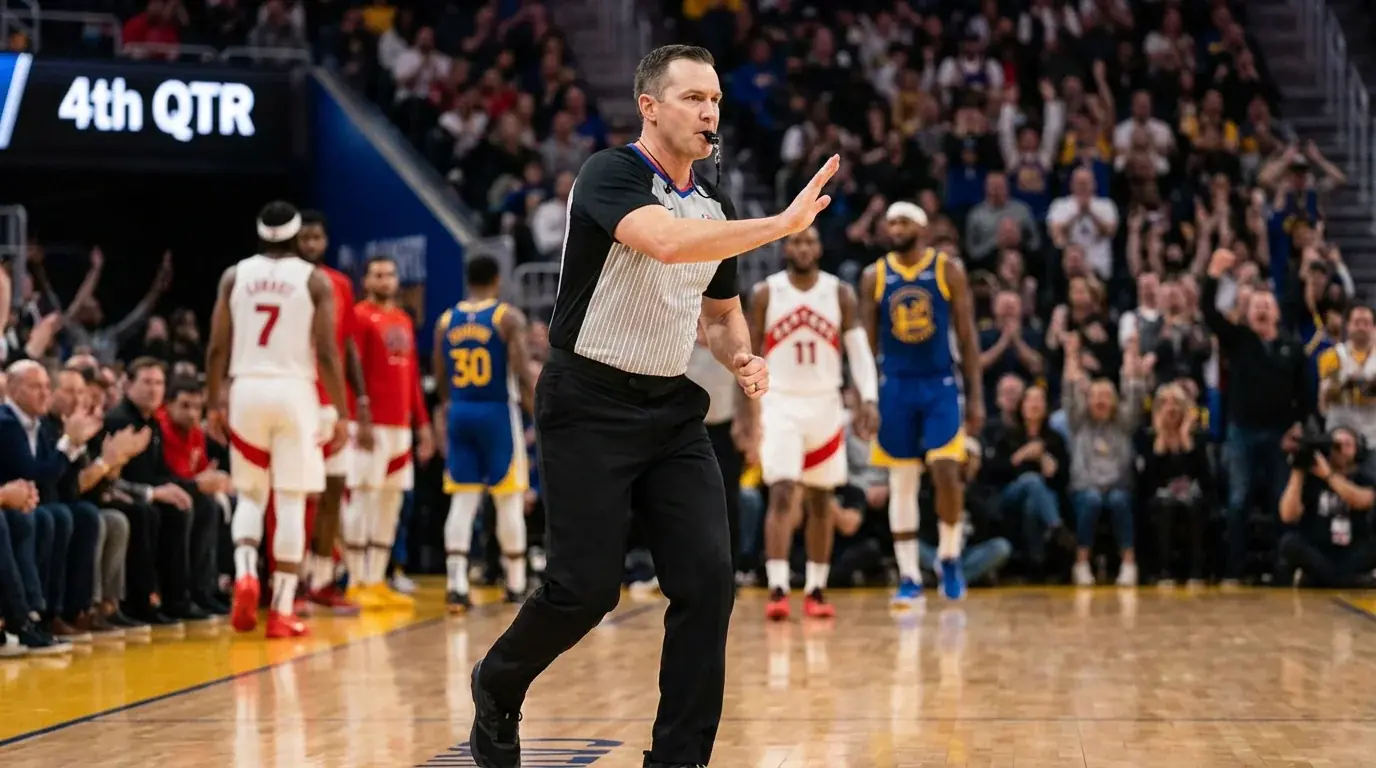
NBA referee Tim Donaghy bet on games he officiated across four consecutive seasons. He received $2,000 for each correct betting tip, later escalating to $5,000 per recommendation. The FBI investigation revealed he had been providing inside information to gambling associates who placed bets accordingly. His 15-month federal prison sentence in 2008 remains the benchmark against which subsequent penalties are measured.
April 2025 – Jontay Porter’s Lifetime Ban
The NBA issues its first lifetime ban since the 1950s after investigating Toronto Raptors player Jontay Porter. The league confirmed he placed at least 13 bets totalling $54,094 on NBA games between January and March 2025. More damaging: he manipulated his own performance to benefit associates’ prop bets, exiting games early while citing illness or injury. Federal wire fraud charges followed.
October 2025 – The FBI Sweep
Federal agents arrest 34 people on October 23, 2025, including Miami Heat guard Terry Rozier and former NBA guard Chauncey Billups. The investigation revealed connections to organised crime families operating illegal gambling rings. This was not isolated player misconduct – it was systematic corruption involving intermediaries, professional gamblers, and allegedly the mafia itself.
The pattern across these decades reveals something important: the NBA has never fully solved its gambling problem. It has managed it, contained it, and periodically punished those who got caught. But the underlying incentives remain. Players have inside information. That information has monetary value. And as legal betting expands globally, the potential profits from exploitation grow accordingly.
What distinguishes the 2025-2026 scandals from historical precedent is the prop bet angle. Donaghy influenced game outcomes through officiating. Porter and those arrested in 2025 focused on individual statistics that could be manipulated without affecting who won or lost. This represents an evolution in method – and a warning about where future risks lie.
The Rulebook: What NBA Personnel Actually Cannot Do
Every few months, someone emails me asking why an NBA player got suspended for gambling when they saw him at a Las Vegas poker table the week before. The confusion is understandable – the rules are more nuanced than “no gambling allowed.” Understanding these distinctions matters if you want to properly assess which behaviors constitute actual violations versus which are permitted activities that the media sometimes misrepresents.
The NBA’s gambling rules apply to all league personnel: players, coaches, referees, team staff, and league employees. The restrictions vary by category, with the strictest rules applying to those with direct influence over game outcomes.
For players, the core prohibitions are straightforward. No betting on any NBA game, regardless of whether the player’s team is involved. No betting on any basketball game at any level – this includes NCAA, international leagues, and even recreational competitions if money is involved. No providing inside information to anyone who might use it for betting purposes. No associating with professional gamblers or illegal gambling operations.
Adam Silver acknowledged the complexity in addressing these scandals: “While legal sports betting creates transparency that helps identify suspicious or abnormal activity, this matter also raises important issues about the sufficiency of the regulatory framework currently in place, including the types of bets offered on our games and players.” That statement captures the league’s current dilemma – they benefit from legal betting partnerships while simultaneously trying to prevent those same markets from being exploited.
| Activity | Players | Staff | Referees |
|---|---|---|---|
| Betting on NBA games | Prohibited | Prohibited | Prohibited |
| Betting on other sports | Allowed (with restrictions) | Allowed (with restrictions) | Prohibited on any sport |
| Casino gambling (non-sports) | Allowed | Allowed | Allowed (monitored) |
| Fantasy sports | Prohibited (paid leagues) | Limited | Prohibited |
| Sharing injury information | Prohibited before public release | Prohibited | N/A |
The grey areas cause most confusion. A player can walk into a casino, play blackjack, and bet on the Super Bowl. The same player cannot place a $10 bet on an NBA regular season game. A coach can fill out a March Madness bracket at the office, but cannot participate in pools involving NBA games. The logic is to separate personnel from any activity that could influence or appear to influence games they have power over.
What the current rules do not adequately address is the prop bet ecosystem. When Porter manipulated his own statistics, he exploited a market that did not exist when the rulebook was written. The league has since begun working with sportsbooks on additional controls, but the regulatory framework has not kept pace with market innovation. For punters, this gap represents ongoing risk.
Catching the Cheats: Detection Methods and Their Limitations
The question I get asked most frequently at conferences is not how scandals happen – it is how they get caught. The answer involves sophisticated algorithms, cross-border cooperation, and occasionally just someone being monumentally stupid about covering their tracks. Modern detection has improved dramatically, but gaps remain that any honest analyst must acknowledge.
Sportradar operates the industry’s most comprehensive integrity monitoring system. In 2025, they tracked more than 850,000 matches across 70 sports globally and flagged 1,108 suspicious matches – a 17% reduction from 2023. The improvement sounds encouraging until you consider what “suspicious” means: these are matches where betting patterns deviated significantly from expected norms. Only a fraction result in confirmed manipulation, and only a fraction of actual manipulation gets detected.
1 in 615
The ratio of suspicious matches to total events monitored globally in 2025, improved from 1 in 467 in 2023. Basketball ranked second globally for suspicious activity with 187 flagged cases.
Andreas Krannich, Sportradar’s EVP of Integrity Services, framed the situation carefully: “While the notable reduction in suspicious matches in 2025 gives us reason to be optimistic, it also signals the need for continued vigilance and innovation, given that the number remains significant.” That measured language reflects a professional understanding that detection is a moving target. Manipulators adapt; monitoring must adapt faster.
Detection typically begins with algorithmic analysis of betting market movements. If significant money enters a market just before an unexpected outcome, the system flags it for human review. Investigators then examine whether the betting pattern correlates with specific player performance, injury reports, or other inside information. The Jontay Porter case was initially flagged when prop bet limits were exceeded in ways that suggested coordinated action.
The process has inherent limitations. Underground markets – offshore books, illegal operations, peer-to-peer betting – often fall outside monitoring systems. The $402 billion wagered through unlicensed US bookmakers in 2025 demonstrates the scale of unmonitored activity. When someone fixes a game and cashes out through an unregulated book, no algorithm catches them. The scandals we know about are the ones where someone made a traceable mistake.
Categories of Violations: From Careless to Criminal
Not all violations are equal, and the distinctions matter for understanding both punishment severity and systemic risk. I categorise them into three tiers based on intent and impact.
Tier 1: Direct Betting – A player places bets on NBA games. This is the clearest violation. Porter’s 13 bets totalling $54,094 on NBA games fell into this category. Individual wager sizes ranged from $15 to $22,000, suggesting both casual and serious betting behaviour. The violation is unambiguous: you cannot bet on the sport you play, period.
Tier 2 violations involve information sharing. A player tells a friend about a teammate’s injury before it becomes public. That friend places bets accordingly. The player may not have directly profited, but they enabled exploitation of inside information. These cases are harder to prove because they require demonstrating knowledge and intent rather than just tracking money.
Tier 3 – and the most concerning for market integrity – involves active manipulation. This is where Porter’s case became exceptional. He did not just bet on games; he deliberately underperformed to ensure certain prop bets paid out. When an $80,000 parlay bet with potential $1.1 million winnings depended on Porter underperforming, and he then played only three minutes before claiming illness, the manipulation became self-evident. That bet was ultimately frozen, but it revealed the mechanism.
The criminal threshold typically arrives when activities cross state lines (triggering federal wire fraud statutes) or involve organised gambling operations. A player betting $50 on a game with a local bookie might face league discipline. That same player coordinating with a multi-state operation faces federal charges carrying potential 20-year sentences.
The Prop Bet Problem: Basketball’s Achilles Heel
If you want to understand why the 2025-2026 scandals were structurally different from Tim Donaghy’s referee scheme, you need to understand proposition bets and their vulnerability to single-actor manipulation.
Adam Silver addressed this directly on a podcast in October 2025: “It’s too easy to manipulate something which seems otherwise small and inconsequential to the overall score. Maybe it’s the couple rebounds that some player gets or whatever. We’re trying to put in place, working with the betting companies, some additional controls to prevent some of that manipulation.”
The fundamental problem: traditional match-fixing requires coordination. You need multiple players, or a referee, or both. Prop bet manipulation can be executed by a single individual affecting only their own statistics. A player can underperform on rebounds without anyone else noticing anything unusual during the game.
An NCAA official captured the vulnerability perfectly in an ESPN interview: “When they’re just based off of individual performance, I think it’s a lot easier for match fixing in that type of situation. You don’t have to get to the overall team, you could just have one individual that could manipulate those markets.”
$80,000 stake / $1.1 million potential
The parlay bet placed on Porter’s underperformance on March 20, 2025. He played just three minutes before citing illness. The bet was frozen before payout.
For punters, this creates an uncomfortable reality. Every player prop you bet is theoretically vulnerable to manipulation by that specific player. Market monitoring helps, but the fundamental asymmetry remains: the player knows what they will do before anyone else possibly can. Under bets – wagers that a player will score below a certain threshold – are particularly exposed because underperforming is easier to execute and harder to detect than overperforming.
The league and sportsbooks are now discussing restrictions on certain prop bet types, particularly those involving low-profile players with small betting limits. Whether these reforms arrive before the next scandal remains uncertain.
When the Hammer Falls: Consequences Across League and Court
I remember exactly where I was when the Porter sentencing recommendations came through. Prosecutors suggested 3.5 to 4 years – serious federal prison time, not a slap on the wrist. That filing made clear that sports betting violations are no longer treated as regulatory technicalities. They are prosecuted as crimes with consequences that extend far beyond career suspension.
The consequences operate on two parallel tracks that rarely intersect favourably for the accused. First, the NBA conducts its own investigation and imposes league discipline. This can range from fines and short suspensions to permanent lifetime bans. These proceedings do not require criminal-level proof – the league can act on preponderance of evidence that conduct violated rules. Porter received his lifetime ban before any criminal charges were filed.
Timothy McCormack – The First Conviction
Porter’s co-conspirator Timothy McCormack received 24 months in federal prison, the first sentence handed down in the case. McCormack was not an NBA player but a gambling associate who coordinated bets based on information Porter provided. His sentence establishes the baseline for non-player participants in these schemes.
Second, federal prosecutors decide whether to pursue criminal charges. Wire fraud – the primary charge in recent cases – carries a maximum sentence of 20 years per count. Prosecutors typically recommend sentences at the lower end for first-time offenders who cooperate, but “lower end” in federal terms still means years, not months. Porter’s projected 3.5-4 year range reflects cooperation credit; defendants who fight the charges face significantly worse outcomes.
| Case | League Penalty | Federal Outcome |
|---|---|---|
| Tim Donaghy (2007) | Forced resignation | 15 months prison |
| Jontay Porter (2025) | Lifetime ban | Projected 3.5-4 years |
| Timothy McCormack (2026) | N/A (non-player) | 24 months prison |
| Terry Rozier (2025) | Pending | Pending trial |
Financial consequences compound the legal ones. Players forfeit remaining contract guarantees upon permanent ban. They face civil liability from the league, teams, and potentially betting operators. Endorsement deals evaporate. Future employment in any basketball capacity becomes effectively impossible – coaching, broadcasting, even youth camps become off-limits when your name is synonymous with corruption.
What strikes me about the current enforcement posture is the escalation from historical precedent. Donaghy received 15 months nearly two decades ago. Current sentencing recommendations run 2-4 times higher. The message is intentional: as legal betting expands and generates billions in economic activity, violations that threaten the ecosystem’s legitimacy will be treated as serious federal crimes, not mere regulatory infractions.
Inside the Investigation: How the FBI Builds These Cases
The morning the October 2025 arrests went public, my phone did not stop ringing. Everyone wanted to know the same thing: how did they get from suspicious betting patterns to 34 people in handcuffs? The answer involves a methodical process that most people – including apparently some of those arrested – fundamentally underestimate.
Federal sports betting investigations typically originate from one of three sources: referrals from integrity monitoring companies like Sportradar, tips from cooperating witnesses already under investigation for related crimes, or parallel investigations into organised crime that happen to surface gambling connections. The October 2025 sweep appears to have involved all three – authorities had been building the case for years before acting publicly.
The FBI’s approach relies heavily on financial forensics. Investigators trace money flows across accounts, identify patterns of deposits and withdrawals that correlate with specific game outcomes, and build timelines showing who had what information when. Digital communications – texts, emails, encrypted messages that become unencrypted through warrants – often provide the explicit evidence connecting financial transactions to specific manipulation schemes.
U.S. Attorney Joseph Nocella Jr. characterised the 2025 case as “one of the most brazen sports corruption schemes since online sports betting became widely legalized in the United States.” That language was not accidental. Prosecutors frame these cases as threats to a newly legitimised industry because it elevates the perceived seriousness and justifies resource allocation.
The Donaghy investigation established the template still used today. FBI agents identified betting patterns, traced payments, obtained communications showing coordination, and then built outward from initial targets to identify the broader network. A previous U.S. Attorney described that case’s significance: “The participation of an official of one of the world’s premier sports leagues in an illegal betting scheme involving his own sport demonstrates the corrupting allure of easy money.”
What defendants often fail to appreciate is the cooperation dynamic. Early cooperators receive substantial sentencing consideration. Those who hold out while others talk receive the harshest outcomes. McCormack’s 24-month sentence reflected early cooperation. Defendants who proceed to trial against cooperating testimony face dramatically worse odds – both legally and mathematically.
The British Angle: What These Scandals Mean for UK Punters
When I present at conferences in Manchester or London, someone inevitably asks why they should care about American basketball scandals. After all, the UK has its own regulatory framework, its own licensed operators, and its own approach to sports integrity. My answer is always the same: the games are global, the markets are interconnected, and manipulation anywhere affects bettors everywhere.
The UK betting market operates under fundamentally different regulation than the US patchwork. More than 500 licensed online bookmakers operate under UK Gambling Commission oversight, with standardised requirements for market integrity, suspicious activity reporting, and customer protections. When you place an NBA bet through a UK-licensed operator, you benefit from this framework – but you remain exposed to manipulation occurring on American courts.
The Gambling Act 2005 established the UK’s current regulatory framework, with the UK Gambling Commission overseeing licensing and enforcement. All operators accepting UK customers must hold UKGC licences and comply with integrity monitoring requirements. This includes obligations to report suspicious betting patterns to relevant sports governing bodies.

Significant regulatory changes arrive in April 2026, when the Remote Gaming Duty increases from 21% to 40%. This near-doubling of the tax rate will reshape operator economics and potentially affect market liquidity on niche products like NBA prop bets. Operators may reduce available markets, tighten limits more aggressively, or concentrate offerings on higher-volume events where margins remain viable.
500+ Licensed Operators
The number of UK-licensed online bookmakers currently operating, all subject to UKGC oversight and integrity monitoring requirements.
For UK bettors, the practical implications are several. First, prop bet markets on NBA games routed through UK operators face the same manipulation vulnerability as those offered by American books – the games are the same, the players are the same, the incentives are the same. Second, UK operators rely on the same integrity monitoring systems (primarily Sportradar) as their American counterparts, meaning detection capabilities are comparable but not superior. Third, if you are placing significant money on NBA player props, you are operating in markets that the NBA commissioner himself has acknowledged are “too easy to manipulate.”
The regulatory gap between where these games occur (US) and where bets may be placed (globally) creates jurisdictional complexity. A manipulation scheme originating in Toronto affects bettors in Birmingham. The UK Gambling Commission can sanction operators but cannot prosecute American players or investigate American networks. This asymmetry is structural and will persist regardless of individual enforcement actions.
What UK punters can do: treat NBA prop bets as higher-risk markets, maintain awareness of which players are under investigation or suspicion, and recognise that odds on individual player performance carry information asymmetry that moneyline or spread bets do not. The scandals are American, but the money lost belongs to punters everywhere.
Following the Money: Market Growth and Its Discontents
The numbers explain everything and nothing simultaneously. Understanding the scale of legal sports betting helps contextualise why these scandals matter, but it does not answer the more difficult question of whether market growth inevitably produces more corruption or simply more visible corruption. After nine years in this field, I lean toward the latter – but reasonable people disagree.
Americans legally wagered $149.9 billion on sports in 2025. That figure would have been incomprehensible a decade ago. Before the 2018 Supreme Court decision that struck down PASPA and allowed states to legalise sports betting, Americans bet less than $5 billion annually through legal channels. The thirtyfold increase represents perhaps the most dramatic shift in American gambling history.
$149.9 Billion
Total legal sports betting handle in the United States during 2025 – a dramatic increase from under $5 billion annually before 2018.
$16.85 Billion
US sports betting revenue in 2025, reflecting continued growth despite increased regulatory scrutiny following the gambling scandals.
Pre-2018 to Present
Annual legal sports betting volume expanded roughly thirtyfold following the PASPA repeal, from under $5 billion to approximately $150 billion.

This growth created the economic conditions for modern scandals. When markets are small, the potential gains from manipulation are limited. When a single game generates hundreds of millions in betting volume across dozens of prop markets, the calculus changes. A player with inside information about their own performance can potentially generate millions in fraudulent profits rather than thousands. The reward justifies greater risk-taking.
Market growth also enabled better detection – a point often overlooked in scandal coverage. Legal betting creates data trails. Licensed operators report suspicious activity. Integrity monitoring companies analyse patterns across regulated markets. The reason we know about Porter’s violations is precisely because legal betting infrastructure flagged unusual activity. The manipulators who succeed are likely those operating through unmonitored channels, where $402 billion still flows annually through unlicensed operations.
Whether this growth is sustainable given recurring integrity crises remains genuinely uncertain. Legislators are paying attention – the US Senate Commerce Committee sent pointed questions to NBA Commissioner Silver following the October 2025 arrests. Regulatory tightening could follow, potentially restricting certain bet types or requiring additional integrity measures. For punters, the trajectory suggests both more betting opportunities and more volatility in what markets remain available.
Protecting Your Stake: Practical Guidance for Informed Betting
After covering every major sports betting scandal of the past decade, I get asked constantly what I personally do differently because of what I know. The honest answer: I approach certain markets with considerably more skepticism than casual punters, and I think you should too. This is not about paranoia – it is about rational risk assessment given available information.
The data supports elevated caution on basketball specifically. Sportradar flagged 187 suspicious basketball matches globally in 2025, making it the second-highest sport for integrity alerts worldwide. North and Central America recorded 84 suspicious matches in 2025 – nearly double the 2025 figure. The trend line is moving in the wrong direction precisely as these markets expand.
Player prop bets carry structural vulnerabilities that moneyline and spread bets do not. A player can influence their own statistics without affecting game outcomes or requiring coordination with teammates. If you are betting player unders specifically, you are betting on markets where a single actor can determine whether you win or lose.
Practical steps you can implement immediately: First, be aware of betting limit changes. When sportsbooks suddenly reduce maximum stakes on specific player props, they are often responding to suspicious activity they have not yet made public. Those limits exist because of information asymmetry – and not in your favour.
Second, diversify your basketball betting away from individual player performance markets toward team-based outcomes. Spread betting and totals require broader coordination to fix, which makes manipulation harder to execute and easier to detect. The scandals we have seen involved individual player props precisely because that is where the vulnerability exists.

The most practical protection is market selection. Every NBA betting scandal since 2025 has centred on proposition bets involving individual player statistics. Moving your action toward team-based markets does not eliminate risk, but it substantially reduces your exposure to the manipulation mechanisms that recent cases have exposed.
Third, pay attention to injury report timing and player availability. The manipulation schemes we have documented relied on inside information about player health and intentions to play. If you notice unusual betting line movements before injury information becomes public, that market may already be compromised. Sitting out is sometimes the smart play.
None of this guarantees protection – sophisticated manipulation can defeat any individual punter’s precautions. But rational market selection based on known vulnerabilities is the difference between informed betting and hoping for the best in markets where others may hold decisive advantages.
Frequently Asked Questions About NBA Betting Scandals
What are the NBA’s rules on player gambling?
NBA players are prohibited from betting on any NBA game, regardless of whether their team is involved. They cannot bet on basketball at any level, including college, international, or recreational games involving money. Players are also barred from sharing inside information with anyone who might use it for betting purposes and from associating with professional gamblers or illegal gambling operations. Certain activities remain permitted – players can visit casinos, play poker, and bet on non-basketball sports like American football, provided they do not violate other league rules in doing so. Referees face the strictest restrictions and cannot bet on any sport during their tenure as officials.
What happens if an NBA player bets on games?
Consequences operate on two tracks. The NBA can impose league discipline ranging from fines and suspensions to permanent lifetime bans, as seen with Jontay Porter in 2025. These proceedings do not require criminal-level proof – the league acts on its own investigation and evidence standards. Separately, federal prosecutors may pursue criminal charges, typically wire fraud, which carries maximum sentences of 20 years per count. Recent sentencing recommendations have ranged from 24 months for co-conspirators to projected 3.5-4 years for the primary player defendant. Players also face financial consequences including forfeiture of contract guarantees, civil liability, and permanent exclusion from basketball-related employment.
Who has been banned from the NBA for gambling?
Jontay Porter became the first NBA player permanently banned for gambling since the 1950s when Commissioner Adam Silver issued his lifetime ban in April 2025. Historically, Jack Molinas was banned in 1954 for betting on his own team’s games. Referee Tim Donaghy was effectively forced out in 2007 following his gambling scandal, though he technically resigned before formal proceedings concluded. Several cases from the October 2025 arrests remain pending, including Terry Rozier and former player Chauncey Billups, who face federal charges but have not yet received final league discipline. The complete historical list includes additional players from the 1950s era who were banned in connection with the college basketball point-shaving scandals that affected early NBA rosters.
How do sportsbooks detect suspicious betting?
Detection relies primarily on algorithmic monitoring of betting patterns. Systems track odds movements, stake sizes, timing of bets relative to information releases, and correlations between betting activity and game outcomes. Sportradar, the primary integrity monitoring company, tracked over 850,000 matches across 70 sports in 2025 and flagged 1,108 suspicious matches for investigation. When algorithms detect anomalies – such as significant money entering a market just before an unexpected outcome – human analysts review the activity. They examine whether patterns correlate with specific player performance, injury reports, or other potentially inside information. Investigations then involve cooperation with leagues, law enforcement, and financial institutions to trace money flows and communications.
Why are prop bets considered high-risk for manipulation?
Proposition bets on individual player performance can be manipulated by a single actor without requiring coordination. A player controlling their own statistics – rebounds, assists, points – can deliberately underperform to ensure certain bets pay out. This contrasts with traditional match-fixing, which typically requires multiple players, referees, or both to influence game outcomes. NBA Commissioner Adam Silver acknowledged this vulnerability directly, noting that “it’s too easy to manipulate something which seems otherwise small and inconsequential to the overall score.” Under bets are particularly vulnerable because underperforming is easier to execute and harder to detect than artificially inflating statistics. The Jontay Porter case demonstrated this mechanism explicitly: he played just three minutes before citing illness, ensuring prop unders would pay.
What is the difference between betting on games and sharing insider info?
Both are violations, but they involve different levels of direct participation and carry different evidentiary challenges. Betting on games involves a player placing wagers themselves, which leaves direct financial records and is relatively straightforward to prove. Sharing insider information involves a player providing non-public information – such as injury status, playing time intentions, or team strategy – to someone who then uses it for betting purposes. The player may not directly profit, making these cases harder to prove because prosecutors must demonstrate that the player knew how the information would be used. Both activities violate NBA rules and can result in lifetime bans. However, insider information sharing without direct betting may result in different federal charges depending on how the scheme was structured.
How does the FBI investigate sports betting fraud?
Federal investigations typically begin with referrals from integrity monitoring companies, tips from cooperating witnesses, or connections discovered during parallel organised crime investigations. The FBI employs financial forensics to trace money flows, identify deposit and withdrawal patterns correlating with game outcomes, and build timelines of who knew what when. Digital communications – texts, emails, and messages obtained through warrants – provide explicit evidence connecting financial transactions to manipulation schemes. Prosecutors typically charge wire fraud when gambling activity crosses state lines, which carries maximum 20-year sentences. The cooperation dynamic is significant: early cooperators receive substantial sentencing consideration, while those who hold out while others talk face dramatically worse outcomes. The October 2025 operation that arrested 34 people reportedly developed over years of investigation before the coordinated arrests.
Created by the ”nba Player Betting on Games” editorial team.